Tag Archives: courage

Self Worth is the Foundation of Courage

Unless you have a sense of self worth you cannot live courageously.  An inner self belief is the foundation that is required to build courage upon. When you are not sure of yourself you will falter when the going gets tough. When you don’t trust your instincts you will look around to see what others expect of you. When you haven’t taken the time to build up your beliefs in what is right and what is wrong you cannot act with any conviction. When you haven’t spent the time with yourself, learnt to accept what you see and finally come to like yourself, you will always hide. You will hide from yourself, avoid looking, distract yourself and you will hide from others. Because you are afraid that what is there is inadequate, deficient, unlikeable.

We are trapped until we take the time to get to know ourselves and accept ourselves for who we are, until we fully accept ourselves with all our strengths and our faults and imperfections. In doing this we gradually learn to care less about what other people think, and care more about what we think. We are able to act according to what we believe to be right. We become less eager to please others and more eager to please ourselves.   We can open up when we are not craving approval. Other people can take us or leave us. Not everyone will like us. And when we are no longer afraid of who we might be, are no longer ashamed of ourselves, then we don’t have to hide and we become free.

Future blog posts will address why a sense of self-worth is so lacking in our society, so difficult to acquire and what we can do to build ourselves a solid foundation for a courageous and whole hearted life.

The Gentle Art of Encouragement

We all know how good it feels when someone offers us words of encouragement, whether that is appreciation, or words of support when the going gets tough. Well chosen words of encouragement can be a boost to our morale, or even a lifeline.

So how can we gift this encouragement to others. How can we develop our ability to encourage.

It is a gentle art. It requires a degree of letting go of your own needs for a while in order to place another person’s needs in the centre of your attention. This is hard to do when you are feeling the pressure of your own needs. It is old wisdom and none the less true that we have to look after ourselves before we can look after others.

Because we have to be very clear that our words of encouragement are truly in the interests of the other person. Sometimes we want to cheer people up because we are uncomfortable with their emotions. It may be that what they really need is someone with them while they cry or vent. We often find it hard to praise others in areas where we feel inadequate or under-appreciated. The better we know, and like ourselves, the better able we are to put our needs to one side in order to encourage others as they need.

Now we need to focus and listen. Being listened to fully and with appreciation, without judgment is rare and wonderful. Without words we give the message that what they have to say is worth listening to. People feel validated. Listening with rapt concentration to what the other person is saying will help them to unbundle their own thinking and then they often find their own way forward.

When you do speak, consider carefully what the other person needs right now, if anything at all. Consider what a person needs along a spectrum of support or challenge, and what will take them one or two steps in the right direction. Sometimes people need to be held and supported just where they are with words of comfort and solace. Sometimes they can be helped along with new ideas or a fresh way of thinking and sometimes they need to be challenged to confront the reality of their situation. Sometimes people need to be told that they are doing fine, just as they are.

When you are really clear that you are acting in the interest of the other person, and you fully tune into their needs you will be able to select the right words, and offer that much needed, but all too rare, gift of encouragement.

It takes Courage to be Free

Many people complain about their lives. They are unsatisfied with their jobs, with their relationships, with the place they live. They feel that their life is dull. It seems odd when we think about it. We know that they have the freedom to choose.

We all have the freedom to choose.

Every part of our lives, both the big decisions and the everyday acts present us with choice. For the most part we carry on as we did yesterday and the day before, and the month and the year before. We live a life that is expected of us.  We live as though we are in a prison made of our habits and our fear.

We are afraid of our freedom.

To accept that we are free to choose means taking responsibility for ourselves, for our lives, and for the unknown consequences of our decisions.

But how else are we to live? How else can we be fully alive if we don’t take this responsibility?

Take the chance. Tear down the prison walls. Make the changes that you yearn for. Take a leap of faith in yourself, that you can create your life, rather than just letting it happen.

Have courage and choose freedom.

The Two Words that Shape our Lives

The path of our life is dictated by what we say yes to and what we say no to. Our lives are shaped by what we accept into our life and what we turn down. Opportunities, activities, people and experiences come our way and the decisions we take have a critical influence on how the rest of our life unfolds.

However, we sometimes find that we get into a habit of saying yes, or of saying no.

Some people say yes to pretty much every request that comes their way. Their difficulty in saying no can be so extreme that they exhaust themselves to the point of burnout before realising that something is going wrong. Life is finite. Time is finite. Every time we say yes to something we are saying no to something else. People who say ‘yes’ too much are saying ‘no’ to themselves, to their needs and wants.

There are other people whose primary orientation is to say ‘no’. They say no to new opportunities, to new people, to change, to risk. It’s as if saying no keeps them safe, keeps them safe from challenge, from demands, from failure, from rejection. Change comes to everyone, it is an intrinsic part of life. The more we try to control this, the less prepared we are when it comes. By saying no we keep ourselves in our comfort zone, and we find that our comfort zone shrinks, until we fear our own shadow.

Either way, when things are out of balance like this, there are disastrous consequences for our quality of life. Given the vital importance of choosing what we say yes to and what we say no to, it is important to gain control over our decisions and choose wisely.

So what should we say yes to and what should we say no to? How are we to know what is right? The truth is that we can’t know how our decisions will turn out. But this doesn’t let us off. I believe that putting our lives in the hands of fate is an excuse. We have to take the responsibility of taking our life seriously.

We cannot know the consequences but we can still consider what we think will lead to the best outcome. What will give us pleasure and/or help us grow? What will take us out of our comfort zone so that we might grow and learn? What will give others pleasure and/or help them grow? What are the risks involved? Which of these considerations is most important right now?

We can also tune into our intuition. Taking a moment to check in with ourself, with how we feel if we are to say yes, and how we feel if we are to say no may give us the clear answer we need.

With practice, we can bring more of our decisions under conscious control, and so our lives become more deliberate, more self-governing, more our own.


What could we achieve?

In our earliest years we aspire to be like the heroes of the comic book variety, strong, courageous and true. And then it seems that life gets in the way.  We get sidetracked, distracted, bought. We manage to convince ourselves that such leaders belong in the world of childhood fiction.

After all, the leaders in our world, the non-comic world, are all too often seen to be self-serving, expenses-cheating and transparently fraudulent, and set no kind of example for new leaders, society at large, or ourselves to follow.

What if we could re-connect with our inner beliefs in integrity, honour, strength and courage? What if we could quell the fears that rise up as we consider standing up and standing for what we believe to be right and good and true? What then could we achieve?

mandela

Courage means asking ourselves 3 difficult questions

Today I am considering courage as a process of alignment, and specifically of aligning action with intent, in other words aligning what we do with who we are.

This might seem foolishly self-evident since we always act on our intent – we can’t lift a cup of tea to our lips without intending to do so and this has little to do with courage.  No, courage enters the scene when we decide to undertake this process with rigour and consistency and ask ourselves some very challenging questions.

What Am I For?

When my elder son was 4 years old he went through a phase of asking me, loudly and within earshot of the poor fellows, ‘mummy, what is that man for?’ It has been a long-standing family joke, and yet today it seems deeply significant. The question ‘What am I for?’ delivers an existential punch, that is often avoided or occasionally tackled only if one is feeling courageous enough.

Finding one’s meaning, ethics or values in life can be a process of adopting a ready-made religious or philosophical doctrine.  It can also be a process of questioning one’s own being to find what is good and right. The existential philosophers believe it is our responsibility to develop a personally constructed moral code in order to avoid living inauthentically.  Contrary to the opinion of dogmatic people the world over, there is no common, right answer.  Committing to the question is of far greater significance than the answer itself.

What Am I Doing About It?

I have always struggled with the phrase, ‘it’s the thought that counts’.  To me, a considered intention is vital but it’s the act that counts.  Courage means aligning our actions, our behaviour with our intent.  So the next challenging question is ‘What am I doing about it?’

This means showing up, speaking up, protecting what is good, and taking the risk to implement change in the hope of something better.

How Am I Doing?

Finally, courage means always monitoring oneself.  The last challenging question is ‘How am I doing?’  This means both in the sense of aligning actions with intent, and also assessing the impact of our actions in the world, and adjusting our actions according to our learning.

We need to clear our vision and rid ourselves of self-protective distortions to face the reality of who we are and what we do.  We need to use feedback to regulate how we meet the world without diminishing who we are.

This process of orienting towards our life with a commitment to inquiry, action and improvement demands courage, provides a foundation for courage and is courage

The Reality Check

In my studies of psychology literature there is a constant theme.  The path to psychological well-being is a process of increasing self-awareness, whether that is a private journey or assisted by a therapist or coach.

As we start to reflect on our thoughts, feelings and behaviour, we start to see patterns that come automatically to us, that we haven’t noticed before.  We start to see the impact of these patterns on ourselves, our lives and on others.  They may be helpful or detrimental but as long as we remain unaware, they are always limiting.  Raising awareness means that we have to make choices.

If we continue this process of increasing awareness and choice, we will see more and more of our patterns, bring them into question, and choose to keep or discard them.  This ongoing process removes our biases, and allows us to see the world with greater and greater clarity.  When we remove our blinkers and distortions we are better able to see the world as it really is, and see ourselves as we really are.

As we face ourselves we gradually let go of our rigid thinking and defenses, and so we have more of our intelligence available to us.  We raise our ability to think critically and creatively about the situations we find ourselves in.  We become more flexible and appropriate in our responses.

The process of self-reflection releases us towards a healthier, more satisfying life.

Working with a therapist or psychologically trained coach speeds up the process considerably, as they can see our blind spots more clearly and lead us towards awareness, and support us through change.

In Praise of the Long Fix

I don’t suppose this is going to be a popular idea but I am writing today in support of the long fix.  We live in a world that promises quick fixes, crash diets, self-help books that will change your life, management training courses and so on.  Now I am not arguing against the principle of ‘least pain, most gain’.  I am questioning whether much of this actually works at all.

To put this into context, I am talking about improvement, which is by definition making a change for the better.  Something has to change and stay changed.  And I am talking about changes we make to our lives rather than, say, our plumbing system.

We surely know by now that if we go on the latest diet, and then afterwards return to our normal way of eating, the weight will sure enough pile back on.  Nothing will change.  And so it is with the rest of our life.  If we read the book, go on the course, make the promise, but don’t permanently change the way we think and act we will stay just the same.  We have to attend to and maintain this attention on whatever it is we want to change.  It will eventually become a habit but until it does we have to make an effort to maintain a new discipline.

Let’s consider an example.

I have struggled with poor self-belief for a very long time.  I gradually became aware of a number of thoughts that would rush in whenever I was faced with a challenge, and were actually running in the background most of the time.  They were vicious thoughts such as ‘you always were lazy’ and ‘you are doomed to failure’. It was hard to take any kind of risk while this was going on in my head.  So, I paid attention to my own thinking, and when I started to feel wobbly, scared, when my excuses started rearing up, I listened out for those bullying negative thoughts, and told them to go away.  I turned my attention away.  And I did it again, and again and again.  It took about 6 months.  At last I now seem to have retrained my mind.  I haven’t heard them for months, and I can get on with the life I want, with the work that I believe will make a difference.

If you really want to make a lasting change, resist the lure of the quick fix and knuckle down, be determined and head for the long fix.  It will change your life.

Testimonials

“I got the promotion approved! So now I have no battle, even the one within myself seems to have faded… I feel like for the first time two important aspects of my life are going well, I feel happy and at peace. Even if I might have eventually got to this point by myself, I can honestly say that those six sessions spent talking to you and listening to you really gave me the kick I needed to change things”

“Jane & I covered career and personal issues. Jane helped me get plans/stages in place regarding career and helped me take positive steps towards my goal.  I really do feel Jane has been a very positive influence over the past few months, the sessions have given me more confidence to deal with ‘life’s hurdles’.  Many Thanks Jane.”

“I have thoroughly enjoyed my coaching sessions with Jane. The gentleness of her approach means I felt very comfortable digging deep into my emotions, yet she ensured we remained focused on the task at hand to achieve the objectives we identified at the outset. The level of ‘home work’ she suggested suited my busy schedule and I acquired great insights that will help me greatly in my career as well as my life in general. I would actually consider Jane’s coaching services again in the future and I can’t recommend her highly enough.”

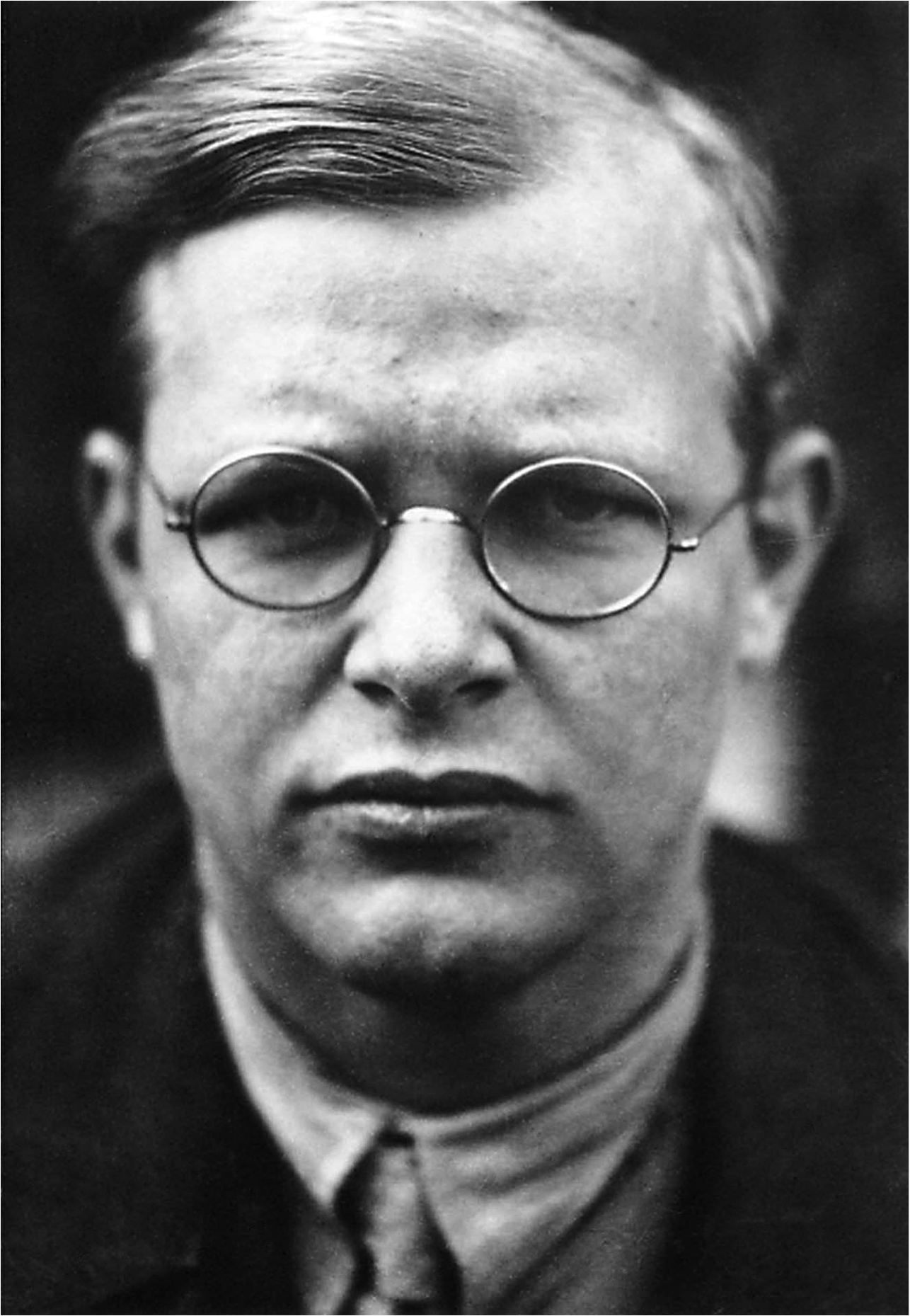
Dietrich Bonhoeffer – A Man of Courage

Dietrich Bonhoeffer was a man of exceptional moral courage. Image

He was born in 1906 in Germany into a comfortable professional family, and surprised his family by deciding at the age of fourteen to train for the clergy. 

As Hitler and the Nazi party rose to power it was Bonhoeffer’s view that the Church had a duty to stand against the injustice of anti-semitism.  The day after Hitler assumed office in 1933, Bonhoeffer gave a radio broadcast directly challenging him.  His Church failed to support him.  He argued that that the Church had responsibilities to the state but in the case of gross misrule, as with the Third Reich, the Church had a duty to act – to ‘jam a spoke in the wheel’.

Support amongst fellow churchmen was weak or absent and he ended up having to work alone.  He had excellent prospects in the Church but not only risked all such prospects but also censure from his profession, friends and society.  His actions put him in personal danger. 

He was not a zealot.  He didn’t have the comfort of single minded conviction, but questioned how he alone could be right when highly esteemed clergy did not support him.

He believed that action was needed and finding no support within the Church, he joined the Abwehr, a military intelligence unit, acting as a double agent trying to get allied support for a coup to bring down Hitler. 

In 1943 Bonhoeffer was arrested and spent the rest of the war in prison.  He was hanged just a few days before the end of the war.   One of his parishioners, Ernest Cromwell wrote of Bonhoeffer

“Life was not a question of safety first and making ourselves comfortable.  It was a question of adventure and risk for things that are worthwhile, because his whole philosophy of life, religion and belief was that life was a period of development, it wasn’t static;  it was something that you had to create, in your context, with other people.”